The Supreme Court has disposed of a long-pending case concerning legislative privileges and freedom of speech, deeming it infructuous due to the Tamil Nadu Assembly withdrawing its resolution against journalists. However, the seven-judge bench has kept the substantial legal questions regarding the interplay of fundamental rights and legislative privileges open for future adjudication.

The Supreme Court has directed the Jammu and Kashmir administration to issue a no-objection certificate and relieving order to international water sports coach Bilquis Mir, enabling her to join the Indian National Kayaking and Canoeing Team as chief coach for the Asian Games. This ruling came after PDP chief Mehbooba Mufti criticised the bureaucratic hurdles faced by Mir, highlighting systemic issues within the administration.

Rashmika Mandanna has replaced Sai Pallavi as the lead in the highly anticipated M S Subbulakshmi biopic.

The Supreme Court has intervened to allow international water sports coach Bilquis Mir to join the Indian National Kayaking and Canoeing Team for the Asian Games in Japan. Overruling a Jammu and Kashmir administration order that denied her permission due to pending inquiries, the apex court emphasised the time-sensitive nature of sports administration and directed the issuance of a No Objection Certificate by September 15, 2026.

Get ready for a packed September as Bollywood unveils a diverse slate of theatrical releases, promising a thrilling mix of drama, psychological thrillers, and supernatural tales for movie enthusiasts.

The Delhi High Court has sought the Delhi Police's response on student activist Sharjeel Imam's appeal for bail in a UAPA case related to the 'larger conspiracy' behind the February 2020 Delhi riots, challenging a trial court's dismissal of his plea.
The Supreme Court granted interim bail to two Delhi riots accused, while addressing concerns about conflicting views on bail under the Unlawful Activities Prevention Act (UAPA). The court referred the question of law on whether prolonged incarceration can override UAPA restrictions to a larger bench.
The Supreme Court has dismissed activist Umar Khalid's plea seeking a review of a verdict denying him bail in connection with the 2020 Delhi riots conspiracy case.

The report of a three-member committee investigating the grounds for the removal of High Court judge Yashwant Varma, following the discovery of burnt currency notes at his residence, will be tabled in the Lok Sabha during the upcoming Monsoon session.
A Delhi court has dismissed the bail applications of activists Umar Khalid and Sharjeel Imam in the 2020 Delhi riots conspiracy case, citing its obligation to follow a previous Supreme Court order that rejected their bail.

Researchers have identified two new species of microscopic snails, Georissa meghalayaensis and Acmella bensoni, in the limestone caves of Meghalaya, India. This discovery highlights the rich, yet underexplored, biodiversity of the region's subterranean ecosystems, while also raising concerns about threats from increasing tourism and mining activities.
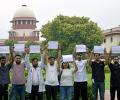
The Supreme Court has refused a plea seeking the NEET-UG 2026 re-test to be conducted in computer-based test mode, citing the National Testing Agency's existing challenges. The court has scheduled the hearing for July 27.
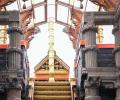
The Supreme Court observed that Hinduism is a way of life, stating that mandatory temple visits or rituals are not necessary to be considered a Hindu; even lighting a lamp at home suffices.

The Supreme Court has directed the central government to provide accurate transcripts of videos related to climate activist Sonam Wangchuk's detention, emphasizing the need for precision in translations, especially with the advent of Artificial Intelligence.

The Supreme Court of India has dismissed the use of information from 'WhatsApp University' as evidence in a case concerning religious freedom and discrimination against women at religious sites, including the Sabarimala Temple.
The Supreme Court of India has stated that religious institutions must have structure and norms for their functioning, emphasising that the right to manage a religious institution does not imply an absence of order.

The Centre has supported the restriction on women of menstruating age entering Kerala's Sabarimala temple, arguing that the Supreme Court's 2018 judgement assumes male superiority.
The Supreme Court of India has observed that the practice of excommunicating Parsi women for entering into interfaith marriages is prima facie discriminatory, emphasising that the right of conscience is a birthright.
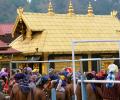
The Shabari story in the Ramayana found mention before a nine-judge constitution bench of the Supreme Court on Wednesday while hearing petitions related to discrimination against women at religious places, including the Sabarimala temple in Kerala.
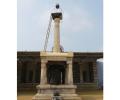
The Supreme Court has sought responses from the Centre, Tamil Nadu government, and others regarding a plea for the Archaeological Survey of India (ASI) to take over the Thirupparankundram temple and ensure daily lamp lighting on a stone pillar.

A nine-judge Supreme Court bench has reserved its order on petitions related to discrimination against women at religious places, including the Sabarimala temple, and the scope of religious freedom.
The Supreme Court is hearing petitions related to discrimination against women at religious places, including the Sabarimala temple. A nine-judge bench is examining the scope of religious freedom and the exclusion of women based on age and menstrual status.
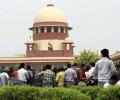
The Supreme Court has upheld a Madras High Court decision prohibiting animal sacrifice and granting limited prayer rights to Muslim devotees on the Thiruparankundram hills in Tamil Nadu.

The Supreme Court of India has voiced concerns about the potential consequences of individuals questioning religious practices in constitutional courts, warning it could lead to the fragmentation of religions and civilisation. A nine-judge Constitution bench is hearing petitions related to discrimination against women at religious places and the scope of religious freedom.
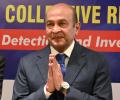
Lok Sabha Speaker Om Birla has reconstituted a three-member committee to investigate the potential removal of Justice Yashwant Varma following the recovery of cash from his residence. The committee has been granted a three-month extension.
The Travancore Devaswom Board (TDB), managing the Sabarimala temple, argued in the Supreme Court that religious beliefs should be judged subjectively by the community, as the court hears petitions related to discrimination against women at religious places.
The Supreme Court has reaffirmed that bail is the general rule, even in cases registered under the Unlawful Activities (Prevention) Act (UAPA), while granting bail to an accused in a narco-terror case.
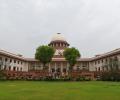
The Supreme Court of India is hearing petitions related to discrimination against women at religious places, including the Sabarimala temple in Kerala, and the scope of religious freedom practised by multiple faiths.
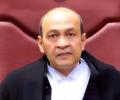
Justice Yashwant Varma of the Allahabad High Court has resigned amid impeachment proceedings sparked by the discovery of burnt currency at his residence, raising questions about judicial conduct and accountability.

Supreme Court judge Justice B V Nagarathna has cautioned against the over-reliance on Artificial Intelligence (AI) in the judiciary, emphasising the need for judicial independence from algorithmic influence. She stressed that AI should only serve as a tool and not replace human judgement, which is guided by legal reasoning, constitutional values, and a deep sense of justice.
Police have named 12 individuals in connection with the murder of six people, including four members of a family, stemming from a land dispute in Vijayapura district, Karnataka. The incident involved a long-standing disagreement over agricultural land, leading to a violent confrontation with deadly weapons.
Supreme Court judge Justice B V Nagarathna stated that judicial independence in the modern era includes freedom from algorithmic influence, emphasising that AI should only assist judges, who must ultimately decide based on constitutional values and human judgment.
Student activist Umar Khalid has petitioned the Supreme Court for a review of the verdict denying him bail in connection with the 2020 Delhi riots conspiracy case, arguing that there were errors in the initial decision.
Police in Vijayapura, Karnataka, have arrested 12 people following a violent clash over a land dispute that resulted in the murder of six people, including four members of a family.
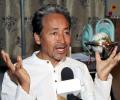
Climate activist Sonam Wangchuk, detained under the National Security Act, denied allegations in the Supreme Court that he incited sedition. His lawyer argued that the police selectively used video evidence to mislead authorities.
Supreme Court judge Justice B V Nagarathna stated that judicial independence in the modern era is not just freedom from external power, but also from algorithmic influence, while speaking at a conference in Bengaluru.
The Supreme Court has stated that roads cannot be blocked for religious activities and that while religious denominations have autonomy in worship, the government can interfere if secular activities are affected.
The Supreme Court of India has asserted its jurisdiction to determine what constitutes a superstitious practice within a religion, during a hearing on petitions related to discrimination against women at religious sites.

The Supreme Court questioned the chief priest of the Sabarimala Ayyappa Temple regarding the constitutionality of preventing believers from touching the deity, during hearings on discrimination against women at religious sites.

The Supreme Court of India has emphasised the importance of open access to all temples and 'maths' for everyone, warning that excluding any denomination would negatively impact Hinduism and divide society. This statement was made during hearings on petitions related to discrimination against women at religious sites and the scope of religious freedom.
